How Long Does It Take for Your Lungs to Heal From Vaping? Hour-by-Hour Timeline
High-concentration 5% nicotine salt vapes coat airway cilia in propylene glycol, vegetable glycerin, and flavoring aldehydes. Here is how long it takes for your lungs to heal after quitting vaping—from 20 minutes to 1 year.
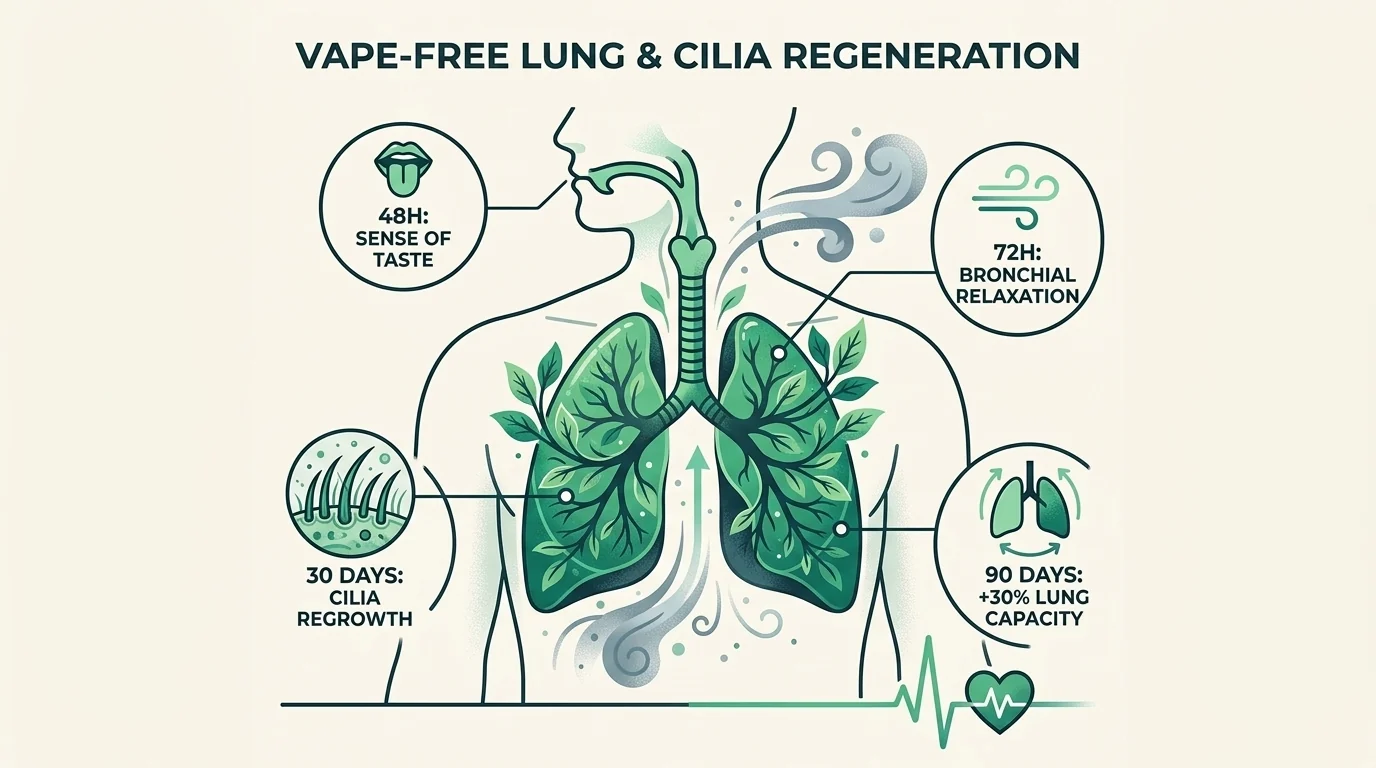
Whether you use high-puff disposable vapes (Geek Bar, Elfbar, Lost Mary) or pod systems (Juul, Vuse), inhaling heated propylene glycol, vegetable glycerin, flavoring aldehydes, and 50mg/mL nicotine salts subjects your bronchial tree to continuous osmotic and chemical stress. The moment you take your final puff, your respiratory epithelium initiates rapid self-repair.
- 24 to 72 Hours: Nicotine clears the bloodstream; bronchial smooth muscle relaxes and chest tightness eases.
- 1 to 4 Weeks: Paralyzed airway cilia wake up and sweep out trapped vegetable glycerin and mucus ("vaper's cough" clears).
- 30 to 90 Days (1–3 Months): Forced Expiratory Volume ($FEV_1$) lung capacity and aerobic stamina increase by up to 20% to 30%.
- 6 to 12 Months: Small-airway inflammation and exhaled nitric oxide ($FeNO$) biomarkers return to non-vaper baseline.
How Vape Aerosol Affects Bronchial Cilia & Airways
Vaporized humectants (propylene glycol and vegetable glycerin) are hygroscopic — they draw moisture out of the delicate airway surface liquid lining your bronchial tubes, thickening mucus and stunning the microscopic hair-like cilia that defend your lungs against infection. Simultaneously, protonated nicotine salts trigger acute arterial stiffness and sympathetic heart rate spikes. (See how much your habit costs each month in our Disposable Vape & Pod Cost Calculator.)
The Complete Quit Vaping Recovery Timeline (20 Mins to 1 Year)
| Time After Last Puff | Respiratory & Cardiovascular Milestone | Clinical Mechanism |
|---|---|---|
| 20 Minutes | Heart rate and blood pressure normalize | Nicotine-induced catecholamine vasoconstriction subsides; peripheral warmth returns to fingers. |
| 24–48 Hours | "Vaper’s tongue" reverses; taste & smell sharpen | Olfactory and gustatory receptors recover from chronic propylene glycol desiccation and flavor overload. |
| 72 Hours (Day 3) | 100% nicotine-free & bronchial tubes relax | All circulating nicotine is metabolized; airway smooth muscle tone relaxes, making deep breaths feel effortless. |
| 2 Weeks | Circulation & aerobic stamina surge | Endothelial nitric oxide production rebounds, improving oxygen delivery during workouts and stair climbing. |
| 30 Days | Mucociliary escalator (cilia) fully active | Bronchial cilia regenerate and clear residual vegetable glycerin and particulate buildup; wheezing resolves. |
| 90 Days (3 Months) | Up to 30% improvement in lung function | Alveolar gas exchange and small-airway inflammation normalize; dopamine baseline is fully restored. |
| 6 to 12 Months | Deep small-airway & immune baseline | Alveolar macrophage lipid clearance completes; lower respiratory infection sensitivity drops to baseline. |
Recovery Speed by Vaping History (6 Months vs. 3+ Years)
How fast your lungs bounce back depends on how long you vaped, your daily puff volume, and whether you previously smoked combustible cigarettes:
| Vaping History | Initial Airway Clearance | Full Stamina & Cilia Recovery | What to Expect |
|---|---|---|---|
| Short-Term (<1 Year) | 3 to 7 days | 2 to 4 weeks | Rapid resolution of throat dryness and shortness of breath during cardio. |
| Moderate (1–3 Years of 5% Disposables) | 1 to 3 weeks | 6 to 12 weeks | Noticeable 1–2 week mucus clearance phase followed by a major jump in deep lung expansion. |
| Long-Term (4+ Years or Dual Smoker) | 3 to 6 weeks | 3 to 9 months | Gradual small-airway remodeling; check cumulative exposure with our Pack-Years Calculator and WHO Health Timeline. |
Why You Might Cough More in Week 1 (Cilia Awakening)
Many vapers worry when they notice throat clearing or extra mucus 4 to 10 days after quitting. Clinically, this is known as mucociliary rebound. While you were actively vaping, your airway cilia were paralyzed by aerosol exposure. Once you stop, those cilia resume beating at 12 to 15 cycles per second, sweeping accumulated glycerin film upward to be cleared. Stay well-hydrated with warm water or herbal tea to thin mucus during this healing phase.
5 Signs Your Lungs Are Healing After Quitting Vaping
- Effortless Full Inhalations: That subtle "catch" or tightness at the top of a deep breath disappears between Days 4 and 14 as bronchial inflammation subsides.
- Temporary Clear or White Phlegm: Your reactivated mucociliary escalator is actively sweeping out residual vegetable glycerin and cellular debris.
- Silence When Lying Down at Night: High-pitched end-expiratory wheezing or whistling in bed resolves as small bronchioles open up.
- Lower Resting Heart Rate: Without continuous 50mg/mL nicotine salt hits, sleeping heart rate drops by 5 to 12 bpm within 72 hours (similar to the Zyn withdrawal heart rate recovery curve).
- Cardio Without Chest Burning: Running, cycling, or climbing stairs no longer triggers an immediate dry bronchial burn.
Recovering From 5% (50mg/mL) Nicotine Salt Dependency
Because vaping has no natural "end point" like a cigarette burning down to the filter, vapers develop a reflexive hand-to-mouth micro-dosing loop every 5 to 15 minutes. Read our Day-by-Day Nicotine Withdrawal Timeline to see what happens during the 72-hour peak, and keep a bottle of ice water with a narrow straw at your desk while using 4-7-8 vagus nerve breathing whenever an urge hits.
Frequently Asked Questions
How long does it take for your lungs to heal from vaping?
Lung recovery begins within 24 to 72 hours as bronchial smooth muscle relaxes and airway resistance drops. Microscopic airway cilia reactivate between 2 and 4 weeks to clear trapped propylene glycol and vegetable glycerin residue. By 30 to 90 days (1 to 3 months), measurable lung capacity (FEV1) and exercise stamina improve by up to 20% to 30%, with deep small-airway inflammation resolving over 6 to 12 months.
Can lungs fully recover after vaping for 2, 3, or 5 years?
Yes, for the vast majority of vapers who do not have rare structural scarring (such as bronchiolitis obliterans). Because e-cigarette aerosol causes primarily osmotic surface dehydration, mucociliary paralysis, and reversible small-airway inflammation rather than decades of combustion tar deposition, epithelial cells and cilia regenerate rapidly once daily aerosol exposure stops.
Why am I coughing up phlegm after quitting vaping?
Propylene glycol and vegetable glycerin aerosols coat the airway lining and stun microscopic cilia. When you stop vaping, those cilia wake up and begin sweeping trapped mucus and aerosol residue up out of your bronchioles. A mild productive cough during weeks 1 to 3 is a positive sign of active lung clearance.
Is withdrawal from 5% disposable vapes harder than cigarettes?
Because 5% (50mg/mL) protonated nicotine salt vapes produce almost no throat harshness and are puffed indoors every few minutes, vapers often experience more frequent habitual cravings during the first 72 hours. However, physical nicotine clearance follows the exact same 3-day window.
Clinical References & Primary Sources
- Health Effects of Vaping and E-Cigarettes — Centers for Disease Control and Prevention (CDC)
- Pulmonary effects of e-cigarette aerosol exposure on mucociliary clearance — American Journal of Respiratory and Critical Care Medicine (ATS)
Tarun builds QuitSmoke Pro and researches nicotine pharmacokinetics, respiratory recovery, and behavioral cessation tools. Every guide is cross-checked against primary literature (ATS, BTS & CDC Pulmonary Literature — American Thoracic Society & CDC E-Cigarette Aerosol Studies). Read our editorial methodology →
Important Health Notice: The content, timeline milestones, and clinical data presented on this website and in QuitSmoke Pro are published strictly for educational, motivational, and informational purposes. They do not constitute clinical medical advice, formal diagnosis, or professional treatment. Always consult a qualified physician or healthcare professional before making any medical decisions or if you have pre-existing cardiovascular or respiratory conditions. Review our Clinical Methodology & Primary Sources →
Start Your Healing Timeline Today
QuitSmoke Pro is designed for lasting recovery with live WHO health milestone counters, savings tracking, and an instant craving coach.